Helicopter screed application (also known as trowel screed or industrial screed) is the fundamental flooring solution for projects requiring high strength, zero dusting, and millimeter-precise flatness from floors, such as factories, warehouses, parking lots, and large commercial areas. This method involves applying special hardeners to the surface of the freshly poured concrete or screed, then compacting and smoothing it using professional troweling machines (helicopters).
Why Should Helicopter Screed Application Be Preferred?
Maximum Surface Hardness: Quartz or metallic surface hardeners applied to the surface are embedded into the top layer of concrete using helicopter machines. This process significantly increases the abrasion resistance of the floor compared to traditional concrete.
Millimeter-Finality: Thanks to the use of Laser Screed Machines during application, even in large areas, smooth floors with millimeter-level accuracy are obtained, free from human error. This is vital for racking systems and forklift traffic.
Dust-Free and Easy Cleaning: The finishing process and surface hardeners close the pores of the concrete. This makes the floor dust-free, resistant to liquids and dirt; cleaning and maintenance are extremely easy.
Emplus Flooring Application Process (Technology-Focused)
At Emplus Flooring, we follow these steps to guarantee quality in helicopter screed pouring:
Floor Preparation and Substructure: Compaction of the floor, placement of insulation, and leveling.
Precise Leveling: The level of the screed to be poured is adjusted with Laser Leveling Systems. The concrete/screed mixture is precisely leveled with machines integrated into this system.
Hardener Application: A surface hardener suitable for the intended use (quartz or metallic) is homogeneously applied to the fresh concrete/screed surface.
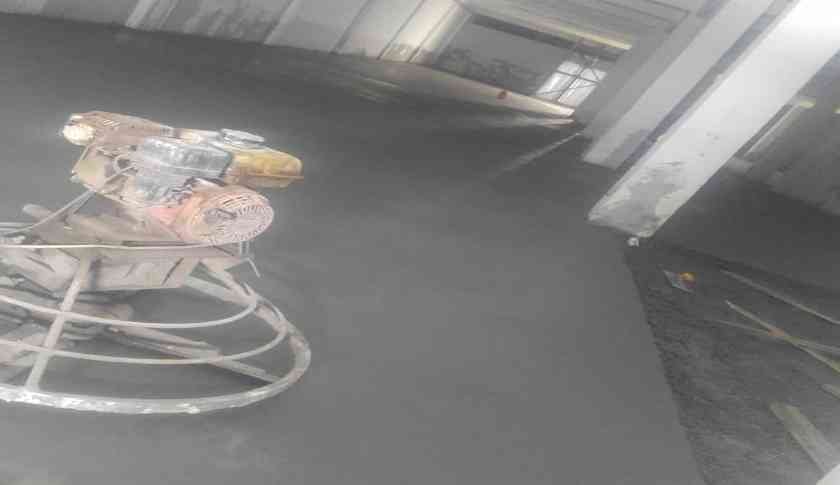
Polishing (Helicopter Application): The surface is densified, compacted, and polished with circular movements using special polishing machines (helicopters). This process gives the floor high gloss and hardness.
Joint Management: After drying, professional joint cutting and filling operations are performed to control thermal expansion.
Application Areas: Factory halls, logistics warehouses, indoor parking lots, gymnasium floors, loading and unloading ramps.
 EN
EN